Date
4 March 2026
Contact
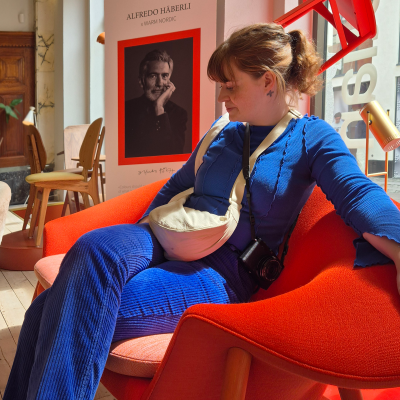
“To create sustainable interiors, we need to think long term. But we must also question our values. What is truly beautiful, and what is worth preserving?”
– Therese Löwstedt, Head of Sustainability at Indicum


Sustainability Report 2025
104 tonnes of CO₂ saved and a shifting industry
Indicum’s Sustainability Report for 2025 has now been published. It reflects a year in which sustainability has moved from ambition to concrete action, both in our projects and across the industry.
Over the past year, we have seen a clear shift in how our clients reason about their environments. More organizations are prioritizing reuse and smaller adaptations instead of extensive refurbishments. Sustainable facility management is no longer an add-on. It has become part of the core decision-making process.
At the same time, we have continued to refine our own methods. Climate calculations and quantity specifications are now integrated into the same workflow, providing better transparency and a clearer connection between design decisions and climate impact.
104,258 kg of CO₂ saved in one project
One of the year’s largest projects demonstrates what is possible when reuse is integrated as a governing principle from the start.
Through structured inventory work and systematic refurbishment, approximately 104,258 kg of CO₂e were saved in an office project for a major Swedish government authority. This corresponds to around 570,000 kilometers by car, or 13 to 14 trips around the globe.
In smaller projects, the impact has also been significant. At Uppsala University, approximately 11,580 kg of CO₂ were saved through the reuse of furniture
The results are clear. Reuse is not a compromise. It is a strategy.
From aesthetics to value and lifespan
But sustainability is not only about numbers.
During the year, we have also asked a more fundamental question: What is truly worth preserving?
For decades, large amounts of furniture have been replaced simply because it was perceived as outdated or unattractive. Even in projects labeled as reuse projects, fully functional furniture is sometimes discarded for aesthetic reasons. To become truly circular, we must rethink how we speak about old and new, beautiful and worn. We need to reassess value and use design as a tool to make the overlooked relevant again.
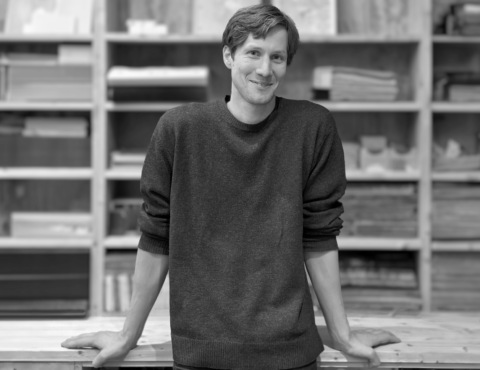
Therese Löwstedt, Head of Sustainability at Indicum, describes it this way:
“To create sustainable interiors, we need to think long term. But we must also question our values. What is truly beautiful, and what is worth preserving?”
From individual projects to system change
In 2025, the development of Hållbar Interiör also entered a new phase. The Vinnova-funded project Circular Office Development Begins with the Tenant strengthens the opportunity to develop methods that can scale beyond individual projects and influence the system as a whole.
The ongoing work with a climate database, updated criteria and pilot projects demonstrates that the industry is moving toward greater transparency and comparability. A shared language for climate impact is essential if we are to reduce emissions in a meaningful way.
Knowledge, dialogue and social sustainability
Throughout the year, we have continued to share knowledge through lectures, seminars and workshops. During Uppsala’s annual Culture Night, we organized the workshop From Waste to Form, where surplus materials from the furniture industry were transformed into new creative expressions.
Sustainability work is not only about technical solutions and data. It is also about dialogue, participation and shifting perspectives.
A year of direction
For us, sustainability ultimately concerns responsibility and direction. It is in the balance between design ambition and consequence that the interiors of the future are shaped.
Would you like to explore our full methodology, project data and reflections in greater depth?
Read Indicum’s Sustainability Report 2025 here